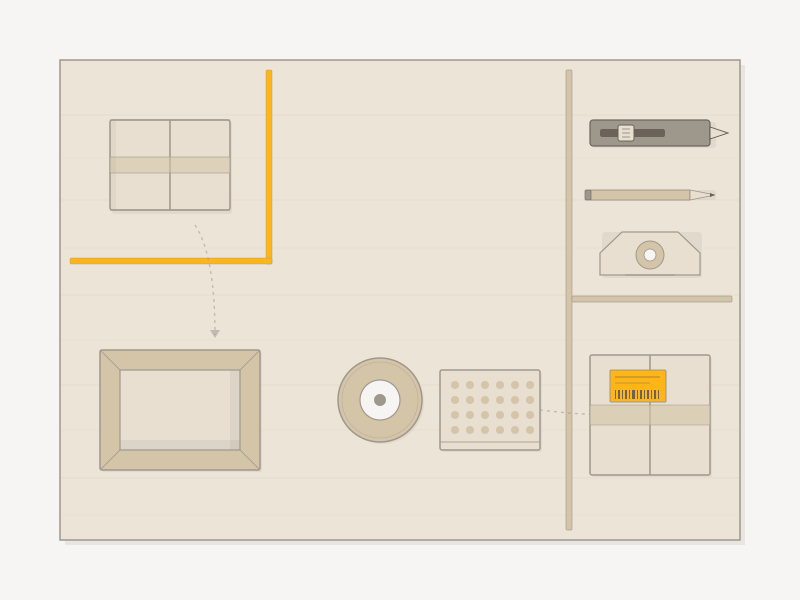
- Four fixed zones replace the cluttered packing table and save 10 to 30 seconds per shipment.
- A one-page written packing instruction makes onboarding and coverage predictable.
- A test pack of five shipments shows in under 10 minutes whether the flow is stable. Spread above 30 percent means: sharpen the instruction.
A packing station is more than a table with material. It is a system of zones, a fixed flow and a written rule. This article shows the setup in six steps, plus the test that proves your setup actually works.
What separates a packing station from a table with material?
A table with material is a storage spot. A packing station is a process. The difference lies in repeatability.
On a table, everyone finds the material eventually. At a packing station, everyone reaches the same way. That saves 10 to 30 seconds per shipment, depending on complexity.
Sample math: at 80 shipments a day and 20 seconds of search time per shipment, that is 26 minutes daily, roughly 100 hours per year. From unclear locations alone.
Three traits separate the two:
- Fixed locations for every material and every tool
- A written sequence of packing steps
- A defined handoff from intake to ready-to-ship
Which 4 zones does every packing station need?
Four zones are enough for around 90 percent of all standard shipments. More zones get cluttered, fewer lead to dual use and search time.
- Zone 1, intake: the next shipment goes here, never a stack.
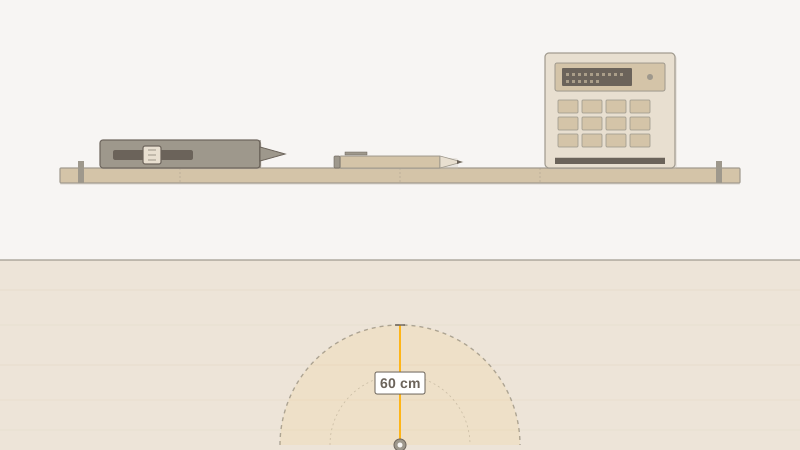
- Zone 2, packing center: box, tape, void fill in a half-circle around the packer, everything within reach.
- Zone 3, tool rail: cutter, pen, label printer, fixed in place or marked.
- Zone 4, ready to ship: the labeled box waits for pickup.
Reach distance follows REFA work-study principles: optimal reach around 35 centimeters, extended reach around 60 centimeters. Anything beyond that costs a small turn every time.
What belongs on the table, what stays in the warehouse?
Only what you use daily belongs on the table. Everything else stays in the warehouse and is fetched on demand.
Rule of thumb: a material belongs on the table when you use it on more than half of all shipments.
| Material | Location | Reason |
|---|---|---|
| Standard box | Table | Most common shipment type, every pack run |
| Standard void fill | Table | Within reach, every shipment |
| Special box | Warehouse | Rare use, fetch on demand |
| Cutter, pen, printer | Tool rail | Daily use, fixed spot |
| Reserve void fill | Warehouse | Refill instead of stockpiling at the table |
Which mistakes cost the most time at the packing station?
Three mistakes show up at almost every cluttered packing station. They cost minutes daily without anyone noticing.
- Material outside reach: every small step toward box or void fill adds up. Half a step per shipment costs around 15 minutes a day at 80 shipments.
- No fixed tools: cutter and pen drift. The search takes 5 to 15 seconds per shipment. Roughly 30 hours per year.
- No written sequence: every packer has their own flow. With coverage, sickness or peak season, the spread becomes uncontrollable.
The numbers are projections based on 80 shipments per day and 220 working days per year. The fix for all three mistakes is the same: fixed locations plus an instruction anyone can read.
Why does every packing station need a written instruction?
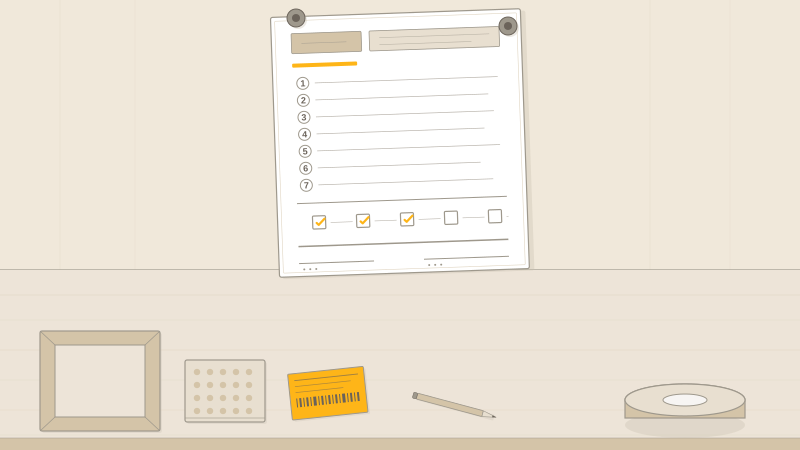
A written instruction makes the packing process independent of the person. It is the basis for onboarding, coverage and quality checks.
One page is enough. More will not be read.
The instruction states:
- Which shipment type it covers
- Which box for which product
- Which void fill, in what amount
- The sequence of packing steps, maximum seven
- Mandatory checks before sealing
- Who approved the instruction and from when it applies
How do you set up the packing station in 6 steps?
The setup runs in a fixed order. Each step builds on the previous one.
- Define zones: mark the four zones with tape or signs directly on the table.
- Assign materials: every material gets a fixed spot, sorted by frequency of use.
- Place tools: cutter, pen and printer on a tool rail, always to the right or left of the packer, never switching.
- Fix the sequence: define the packing steps for your most common shipment type, maximum seven steps.
- Write the instruction: bring the flow onto one page, with material list and mandatory checks.
- Test pack: pack five shipments in a row, time them. If times vary by more than 30 percent, the instruction is not sharp enough yet.
How do you test whether your setup works?
The test is simple: a new packer should be able to read the instruction and pack through day one without questions.
Three checks help:
- Reach test: the packer stands still, all materials for the standard shipment must be reachable without stepping.
- Time test: five shipments, timed. The spread shows whether the flow is stable.
- Search test: an employee from another department packs by instruction. If they ask, something is missing in the instruction.
The test passes when all three checks run without gaps. Then your packing station is productive.
Sources
- REFA Federal Association: Methodology of Industrial Engineering, Data Determination
Packing-station layout and 1-page packing instruction
Zone grid, material list and standard flow, so every new packer can start without questions.
Download template